Securing high-value desert real estate against venomous arthropods and wood-destroying insects requires calibrated chemical barriers, precision physical exclusion, and sustained structural monitoring. For property owners seeking an authoritative pest control service in Scottsdale near me, targeted applications focus on the specialized structural microclimates where invasive and native species congregate.
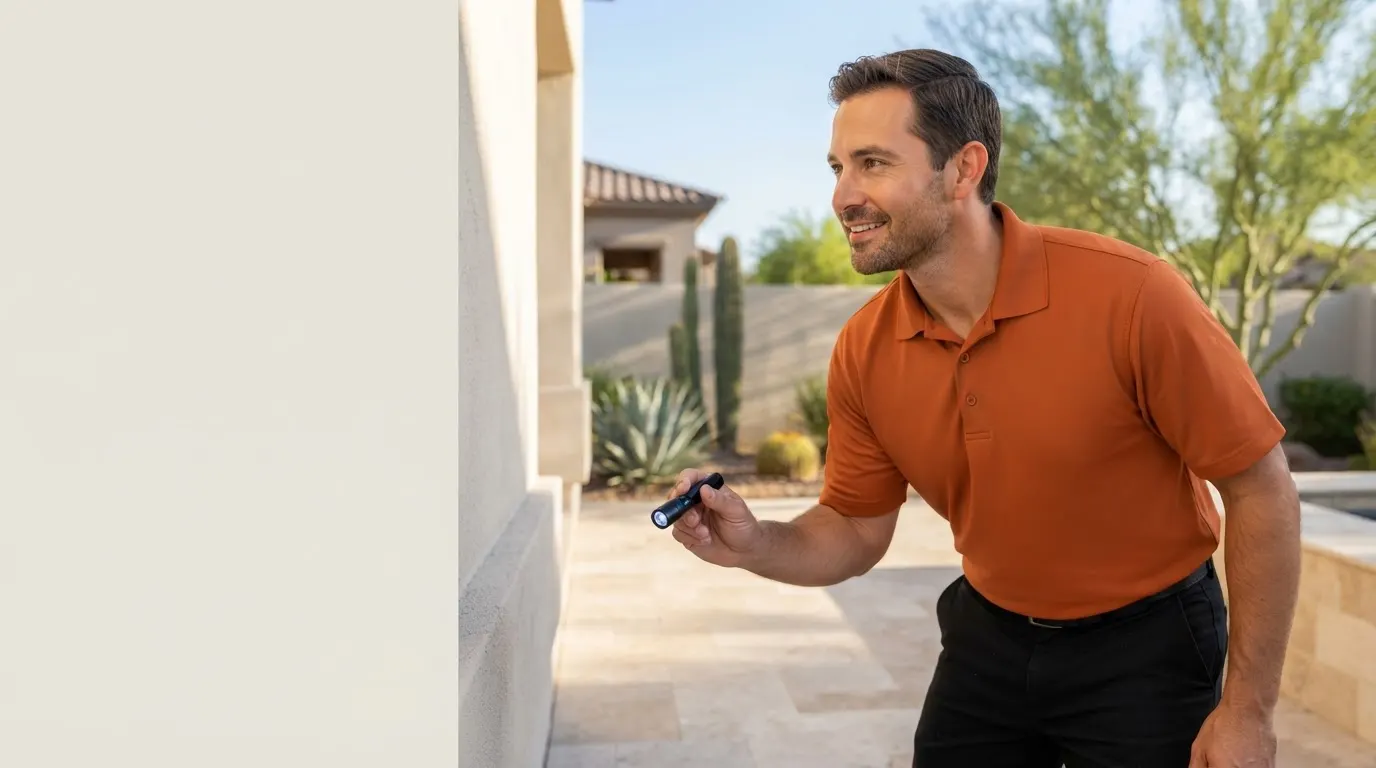
A pest control service in Scottsdale is a specialized structural inspection, eradication, and exclusion treatment designed to eliminate desert-adapted arthropods and wood-destroying organisms from residential properties across Maricopa County.
Every service reflects the same meticulous attention to detail, whether it's a single job or a larger pest control service project across Scottsdale.
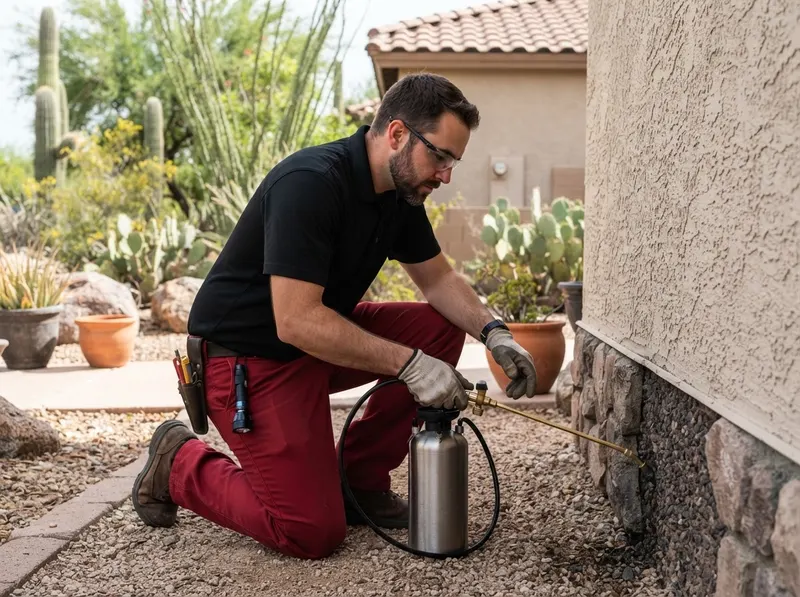
Arizona bark scorpions harbor inside exterior foundation expansion joints, mortar voids of decorative CMU block walls, and open stucco weep screeds. Eradication protocols combine high-output ultraviolet night surveys with specialized microencapsulated synthetic pyrethroids engineered not to break down under sustained ground temperatures exceeding 115 degrees Fahrenheit. Technicians treat exterior resting zones, direct non-repellent formulations into structural expansion joints, and apply dry insecticidal dust within plumbing chaseways where negative air pressure draws scorpions indoors.
Get a quote →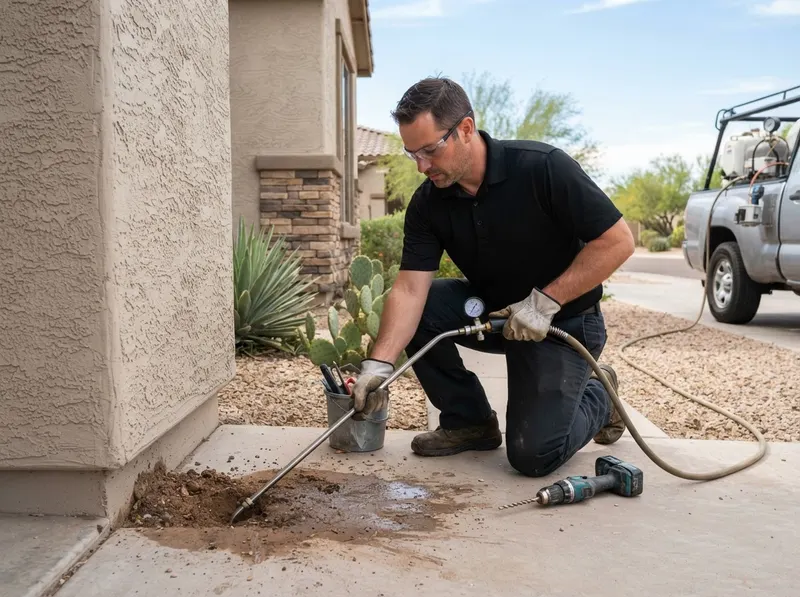
Desert subterranean termites (Heterotermes aureus) construct exploratory mud shelter tubes across stem walls, foundation footings, and structural framing. Eradication involves continuous perimeter trenching, sub-slab pressure injection along post-tension concrete slabs, and precision expansion joint application using non-repellent liquid termiticides like fipronil at 0.06% concentrations. For properties with expansive flagstone or travertine decking, technicians install subterranean bait stations at 10-foot intervals to achieve structural colony elimination without core-drilling exterior stone finishes.
Get a quote →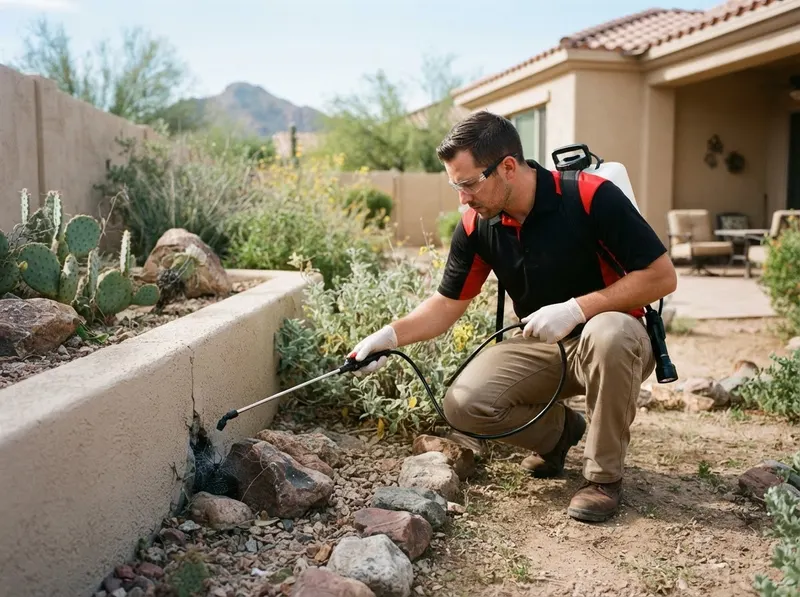
Western black widows and desert brown spiders establish irregular cobwebs in low-lying, dark, and sheltered microclimates across outdoor living spaces, pool pump vaults, utility boxes, and garage corners. Treatment protocols execute direct contact knockdowns, physical web removal with high-reach brushes to extract viable egg sacs, and microencapsulated residual dusting of subterranean utility junction vaults. Technicians also treat exterior eaves, decorative exterior sconces, and expansion voids along perimeter masonry block walls.
Get a quote →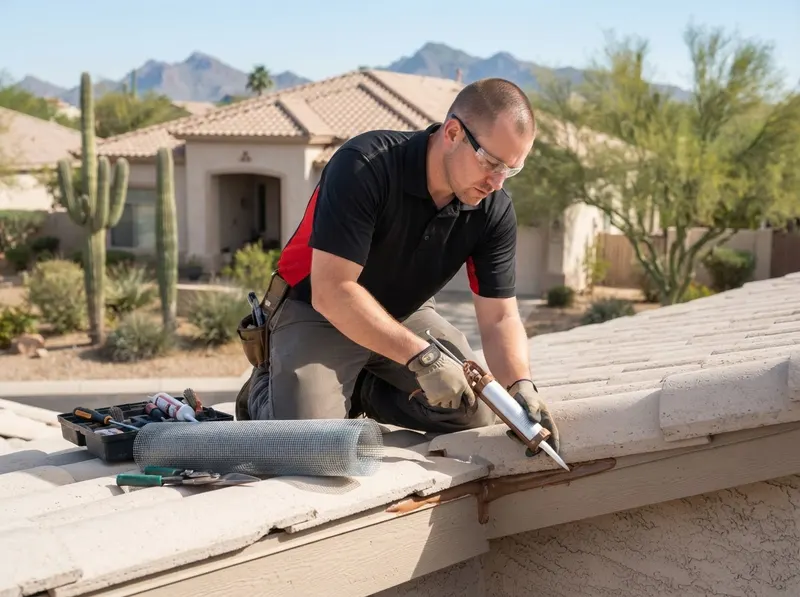
Roof rats (Rattus rattus) exploit dense citrus trees, mature bougainvillea, and clay tile rooflines to access attic cavities. Structural management begins with 1/4-inch galvanized hardware cloth to secure attic dormers, tile roof transitions, barrel tile eaves, and air conditioning refrigeration lines. Technicians position interior snap-trapping stations within attic catwalks for rapid eradication, completely avoiding non-target secondary poisoning hazards to local raptors, family dogs, and desert wildlife.
Get a quote →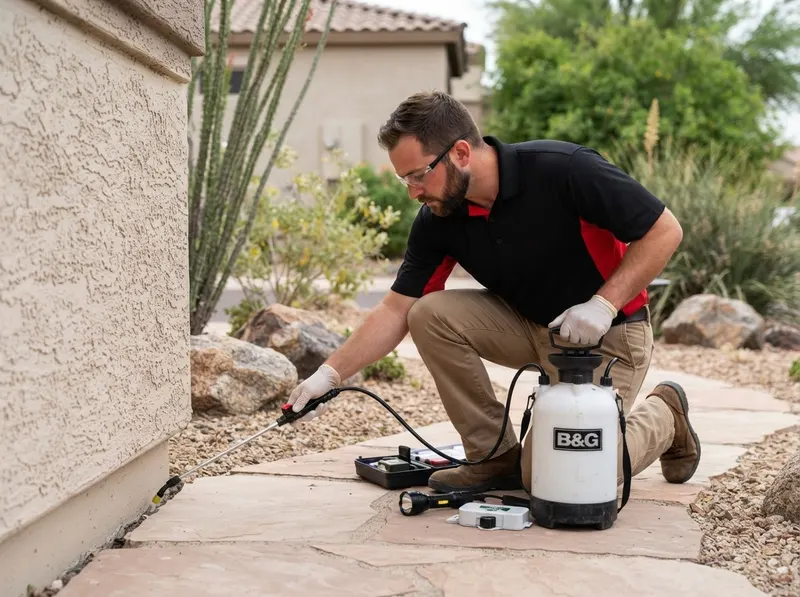
Turkestan cockroaches, American sewer roaches, and field crickets form the critical biomass that attracts venomous bark scorpions and black widows toward structural foundations. Control protocols deploy water-resistant insect growth regulators (IGRs) and weather-resistant granular baits along irrigated turf margins, landscape planter beds, and exterior hardscapes. Direct micro-barrier perimeter applications around foundation stem walls disrupt reproduction cycles before foraging populations can migrate inside.
Get a quote →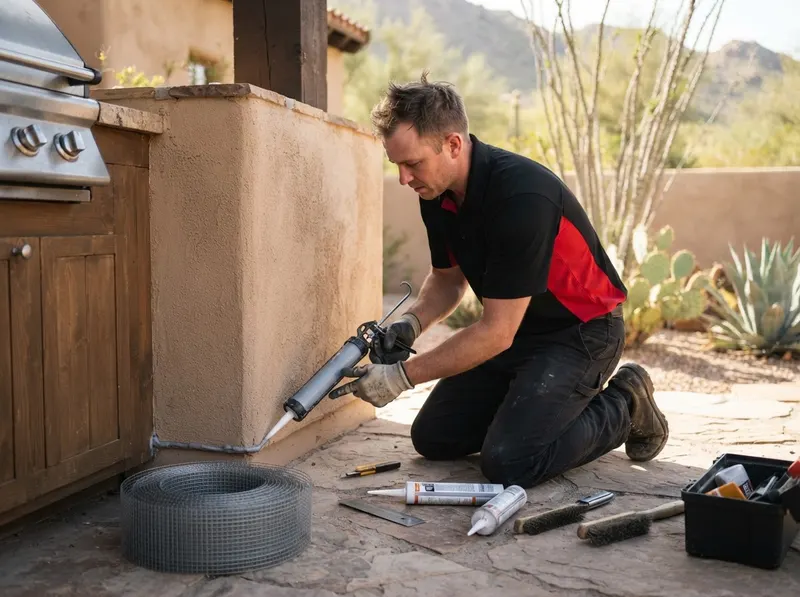
Mechanical pest exclusion provides permanent physical barriers to structurally exclude desert pests without sole reliance on ongoing chemical applications. Technicians install custom-fitted stainless steel or galvanized wire mesh along exterior stucco weep screeds, seal vertical concrete expansion joints with commercial UV-stable elastomeric silicone sealants, install commercial escutcheon plates around copper plumbing penetrations, and apply heavy-duty brush seals along garage door margins.
Get a quote →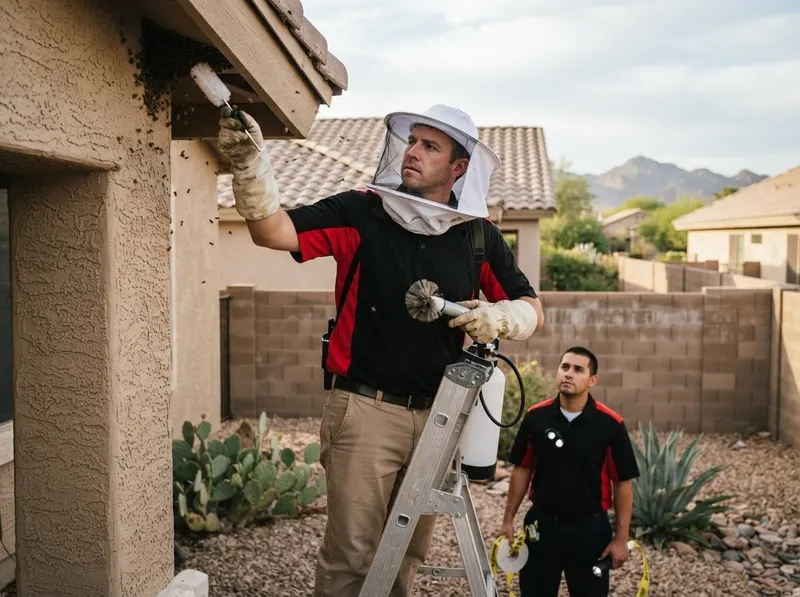
Feral honey bee swarms establishing colonies inside structural wall cavities, parapet soffits, or in-ground irrigation valve boxes present significant stinging hazards. Treatments utilize direct structural knockdown chemistry, thermal imaging to map internal comb dimensions, physical hive extraction to prevent honey fermentation and secondary pest attraction, and synthetic enzymatic masking agents to eliminate directional pheromone trails that draw scout bees back to the cavity.
Get a quote →
Desert carpenter ants (Camponotus pennsylvanicus) excavate nesting galleries within wood framing compromised by irrigation overspray, roof leaks, or outdoor kitchen plumbing dampness. Eradication utilizes non-repellent transfer chemistry applied directly into active foraging paths, combined with dry silica aerogel dust injected into dry wall voids. This dual method eliminates the queen and reproductive brood without causing structural damage to sound framing lumber.
Get a quote →You get a firm, itemized quote for your pest control service before any work begins, no surprises, no pressure.
Careful prep, tidy work, and a full cleanup when we are done. We treat your home and belongings like our own.
The same trusted, background-checked team from the first call to the final check.
Selecting a structural pest defense protocol requires evaluating target pest biology, structural foundation design, and exterior landscape architecture. If managing seasonal surface invaders such as crickets, Turkestan roaches, and wolf spiders, choose scheduled quarterly microencapsulated perimeter barriers. If addressing confirmed Arizona bark scorpions inside living areas, choose full physical exclusion sealing paired with targeted wall void micro-dusting.
The operational trade-off is mechanical sealing demands higher upfront capital investment to modify weep screeds and utility line penetrations, whereas exterior liquid barriers require strict adherence to seasonal reapplication schedules to combat chemical breakdown under extreme Sonoran Desert ultraviolet radiation. For subterranean termite activity, perimeter liquid trenching establishes immediate continuous chemical barriers, whereas baiting systems offer minimal structural drilling disruption but require continuous quarterly bait monitoring cycles to confirm colony elimination.
Every project gets a firm, written price after a free on-site visit. Ranges below for orientation.
Tell us about your pest control service job and we'll send a clear, written quote, usually the same day. Or just call and talk to a real Scottsdale pro.
(888) 495-7652
Scottsdale properties border raw Sonoran Desert landscapes like the McDowell Sonoran Preserve, Pinnacle Peak Park, and the McDowell Mountain foothills, creating immediate structural exposure to displaced native wildlife. Architectural conventions across North Scottsdale, such as sand-finish stucco over open weep screeds, Spanish concrete S-tile roofs, and native granite boulder hardscaping, create sheltered microclimates that invite pest harborages. During summer heat spikes, when exterior surface temperatures on North Scottsdale Road and Pima Road routinely exceed 120 degrees Fahrenheit, desert subterranean termites retreat deep beneath structural post-tension concrete slabs. Simultaneously, Arizona bark scorpions migrate away from dry washes toward irrigated turf, water features, and air-conditioned wall cavities in master-planned communities like DC Ranch, Silverleaf, and Gainey Ranch. In older single-story homes throughout South Scottsdale and McCormick Ranch, mature citrus trees provide overhead foraging paths for roof rats to access clay roof tiles, attic spaces, and copper HVAC line penetrations. Managing pests in this environment requires specialized application protocols engineered specifically for Sonoran Desert temperature extremes and architectural designs.
Free estimates for Scottsdale & the surrounding area.
 Millstone Pest Control