Scottsdale roof rat infestations thrive along mature citrus belts, dense oleander hedges, and riparian zones. In neighborhoods like McCormick Ranch and Gainey Ranch, flood irrigation and non-native palm trees supply…
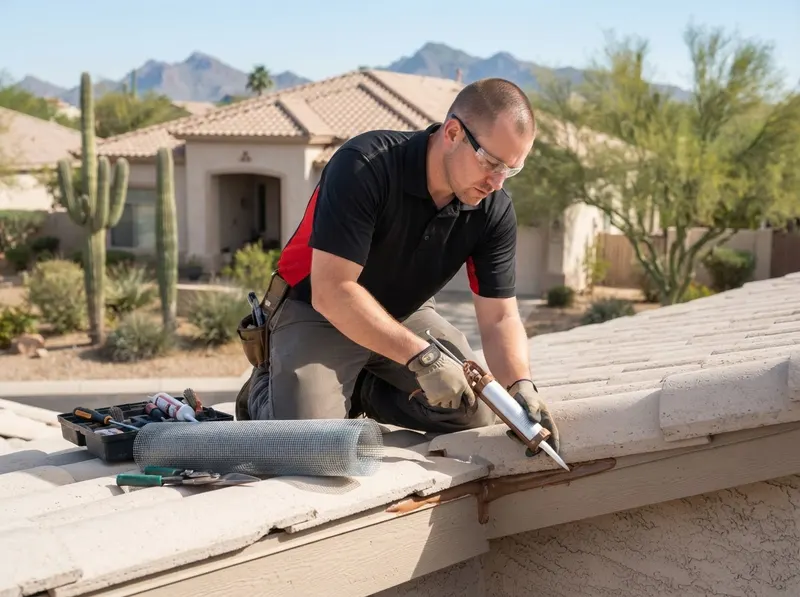
Scottsdale roof rat infestations thrive along mature citrus belts, dense oleander hedges, and riparian zones. In neighborhoods like McCormick Ranch and Gainey Ranch, flood irrigation and non-native palm trees supply stable water and arboreal corridors directly to clay-tile roof transitions. A mature roof rat requires an opening of only 0.5 inches, the diameter of a standard nickel, to slip past Spanish barrel tile caps, lead plumbing vents, and attic dormers. Left unaddressed, rodents gnaw electrical insulation, creating fire risks, and introduce ectoparasites like mites into living spaces. Complete structural exclusion resolves the root vulnerability rather than relying on short-term chemical baits that can lead to animal decay inside interior wall cavities.
Properties in upper desert elevations like Silverleaf, Troon North, and DC Ranch encounter distinct structural vectors where natural desert washes meet modern architectural stone veneers and parapet rooflines. Desert roof rats move along high stone facades and overhanging mesquite limbs, entering through uncapped builder gaps, weep holes, and HVAC chase penetrations. Sealing these access points requires high-grade materials: industrial polyurethane expanding foams degrade under ultraviolet exposure, whereas 16-gauge, 0.25-inch galvanized steel mesh and concrete mortar caps withstand both sharp rodent incisors and intense Sonoran Desert heat without degrading.
Selecting the correct tier of service depends on infestation maturity and attic depth. A trapping-only protocol resolves isolated rodent incursions in modern single-story properties but leaves open entry points vulnerable to seasonal re-infestation when winter citrus drops. A comprehensive exclusion seals the entire exterior envelope, providing lasting structural defense. The mechanical process follows clear steps: first, technicians map exterior roof-to-foundation travel paths; second, specialized snap traps are mapped and secured along primary ceiling-joist runways; third, technicians fit custom metal flashing across all roof vents, ridge caps, and soffits; fourth, interior trap lines undergo mandatory checks every 48 to 72 hours until zero active catches are verified.
Every job gets a firm, written price after a free on-site visit.
Tell us about your roof rat exclusion and removal job in Scottsdale and we'll send a clear, written quote, usually the same day.
 Millstone Pest Control